It’s Not About the Dishes…
As a couple’s therapist, I often meet people when their relationship is on life support. Busy-ness has gotten in the way of connection, and juggling careers, children, chores, and surviving the day-to-day seems like an unending battle. When the couple makes the decision to seek out help, it is a courageous decision - and one that often leads to a rehash of years of resentment that has built. Interestingly,many times this resentment initially shows up in conversations around housework.
A Harvard University study shows 25% of divorces happen in part because of conflict about housework. Add to that work stress, sex, money, new baby, or in-law relationships, and there’s a hefty list of things to fight about. But what if I told you that it’s not actually about the dishes, or the laundry, or the cleaning? These items may be what starts the fight, but the causes of the fight are often much deeper.
Every relationship has peaks and valleys, and my role as a therapist is to help couples discover the deeper patterns that drive these ups and downs, rather than the focus on the surface-level things that may cause them. The clinical term is “process vs. content”, and by unpacking these patterns and finding what they really represent, we can break these cycles.
Let’s discuss a few undercurrents that show up in the fight around housework:
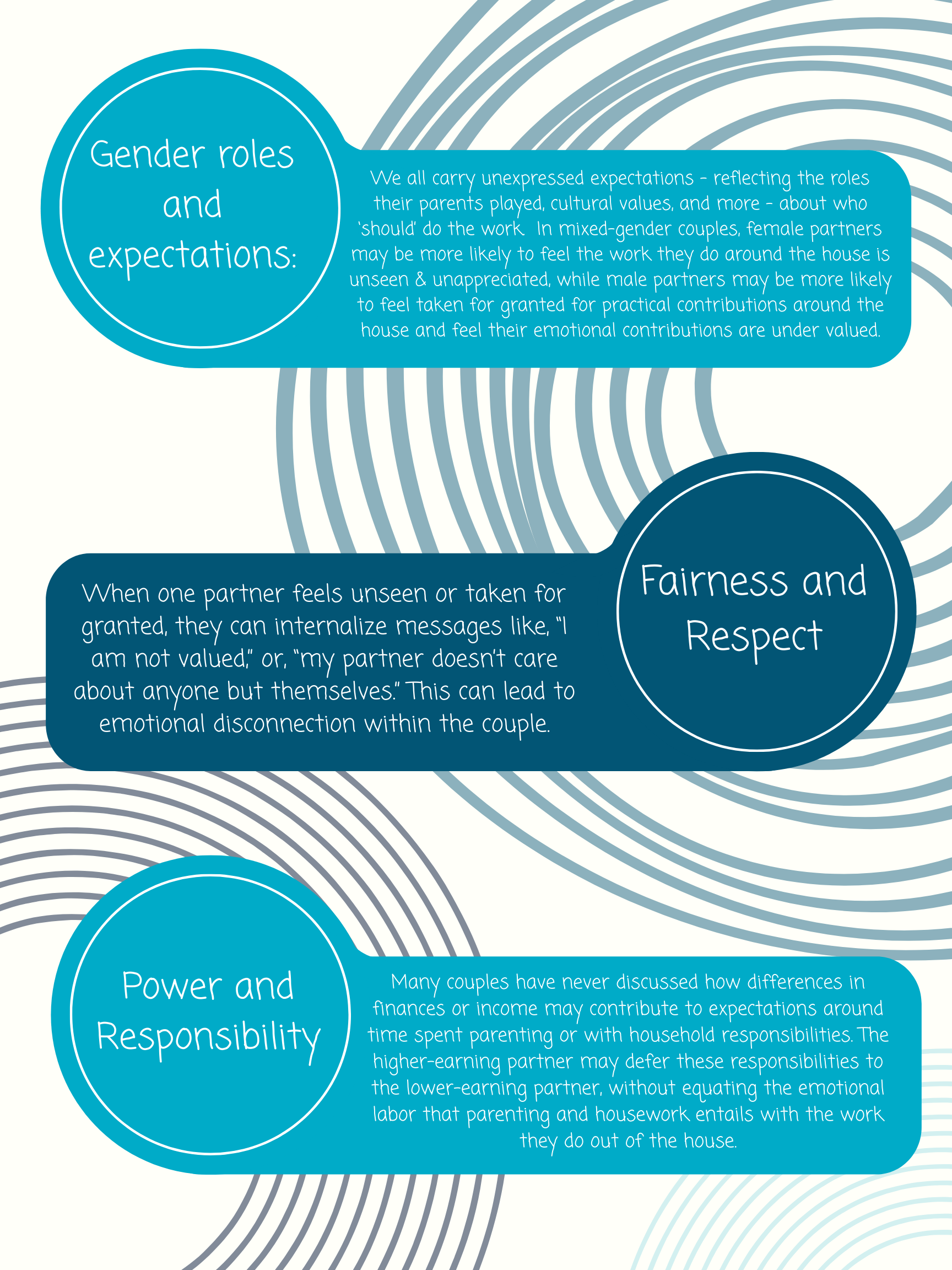
So how can couples end the day-to-day scorekeeping of “who unloads the dishwasher?” and focus on the deeper needs of the relationship? Here are a few ideas:
Learn to name the emotion: Leading with the emotion (alone, underappreciated, overwhelmed) can help diffuse the conversation and helps minimize feelings of criticism.
Create shared meaning: Discuss what each partner wants out of their home, and reframe chores as a way to show caring for the family.
Intentionally build connection: When life gets busy, the things that initially brought the couple together can fall by the wayside. Expressing appreciation, scheduling time together, and noticing what each partner is doing right can help rekindle warmth and connection.
Learn repair; use it often. Successful couples don’t have perfectly smooth waters. They just ride the waves without flipping the boat.
Couples therapy can feel slow - and intentionally staying emotionally connected can be hard work. Real transformation becomes possible when couples learn to understand their patterns and focus on prioritizing and maintaining connection.