Have you ever wondered, “Why did my partner just say that?”, “Why doesn’t he get me?”, or, “What am I supposed to say now?”
Most of us who have been in a relationship have wondered about ourselves, our partners, and our relationships. When things feel a little stuck or off, couple therapy can help both partners understand themselves and each other better to make life easier and more fun.
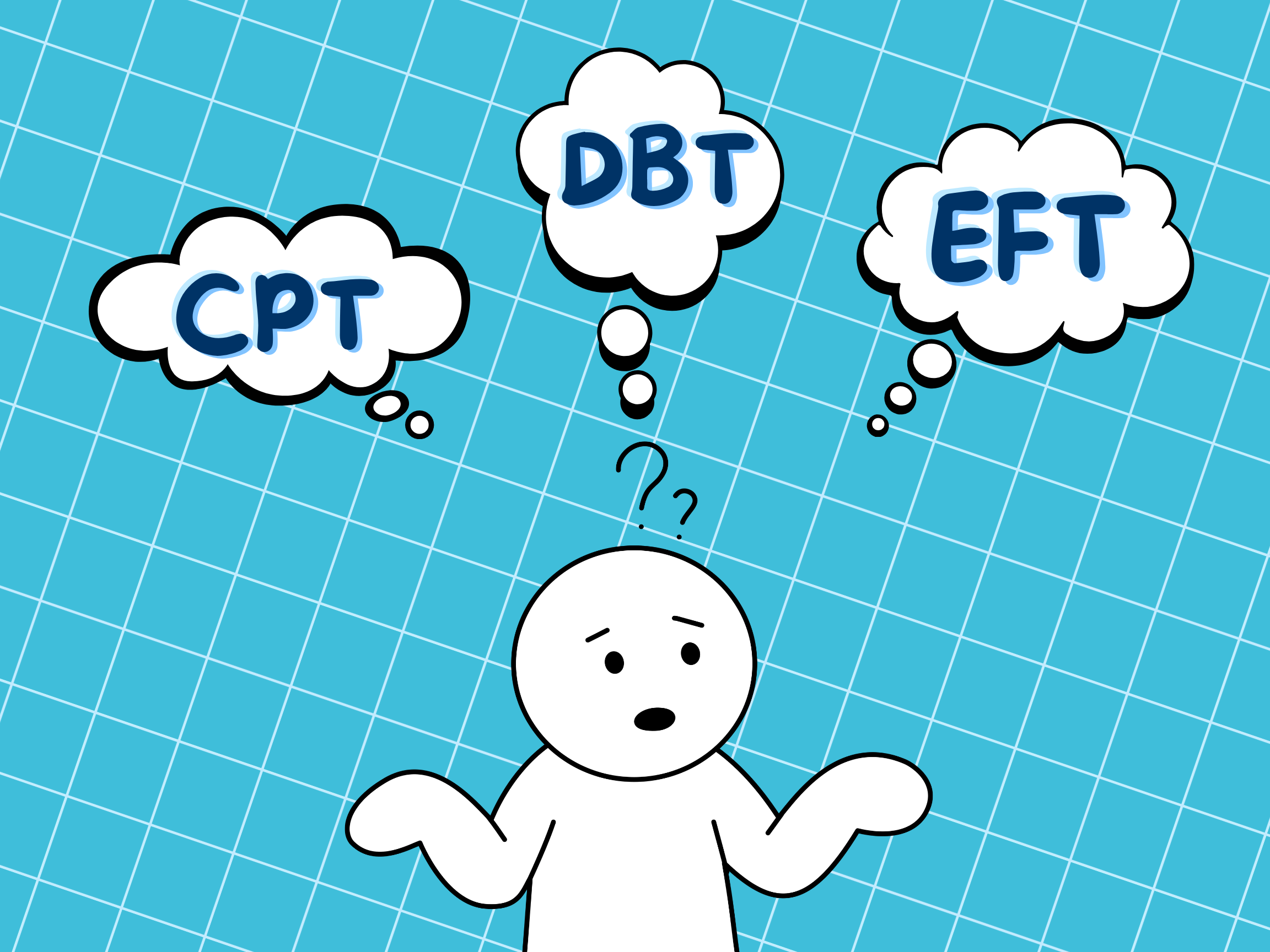
When you’re looking for the right therapist, sorting through acronyms like CBT, DBT, and EFT can be confusing. As a provider trained in Emotionally Focused Therapy (EFT), I love helping people understand what this style of therapy is, and how it can benefit their relationships and overall wellbeing.
Emotionally Focused Therapy (EFT) is an evidence-based approach that connects emotions, relationships, and mental health symptoms to help you grow personally and in your relationship. Therapists trained in EFT believe that connection is the most valuable source of safety and strength in our lives, and EFT guides clients towards greater fulfillment through understanding their emotions.
An EFT therapist will help you explore the role of emotions in your relationships, beginning with building the skills to recognize, understand, and communicate your emotional experiences, including six core emotions: sadness, excitement, shame, fear, disgust, and joy. (If you saw the movie Inside Out, that list might sound familiar.)
In addition to these core emotions, EFT therapists will support you in understanding your feelings about your feelings — like feeling ashamed of fearing abandonment. That could sound challenging, but getting curious about painful emotions helps us understand where our distress comes from. In EFT, we work to become comfortable with discomfort, which helps us navigate life with more ease. As an EFT therapist, I support my clients in this thoughtful and focused process with warmth, acceptance, and a lot of compassion.
Throughout this approach, you will also develop the relational skills essential to enjoying intimacy. With tools like healthy boundaries, self-awareness, and effective communication, EFT helps people change the habits holding them back in relationships. These new skills build confidence and inner calm, and guide clients to better understand those they love most.

EFT also incorporates learning about psychological concepts to aid growth.
In EFT, relationships are understood through the framework of attachment theory, which says that connection is essential to human survival. According to attachment theory, people are born with the capacity to love because it keeps them alive; the more secure love people receive, the more they thrive. “Attachment wounds,” or profoundly negative experiences in early caregiving relationships, can produce patterns and habits that disrupt connections. But “corrective experiences”, including with alternative caregivers, therapists, or close friends, can rewrite our narratives for trust and connection. Your experience in EFT will likely include exploring and resolving impactful past experiences, and your therapist will guide you to learn and use skills to manage the impact of these experiences on the present.
After experiencing an attachment wound, intimacy can sound scary — one might feel insecure about opening up, afraid of being left, or uncomfortable being away from their partner. (Think: “I need lots of space,” or, “Don’t ever leave me!”). EFT helps people move beyond these fears, even if they’re attending therapy without their partner(s).
Some people think that EFT is just for couple’s counseling, but this treatment has been shown to benefit people in individual therapy, too. EFT can help people manage the ways that struggles like depression, anxiety, and PTSD show up in relationships.
If you want to enjoy greater joy, intimacy, and authenticity in your relationships, EFT might be for you.
Source:
Johnson, S. (2016). Dr. Sue Johnson's intensive course in emotionally focused therapy: Attachment-based interventions for couples in crisis [Online course]. PESI.