Connection-Based Parenting - Part 3
Connection-based Limits
What if you could have a nurturing relationship with your kiddo that was a mix of fun and struggles - and if the fun felt more FUN and the struggles felt smaller and calmer?
Parenting doesn’t have to focus on rewards and punishment, or evaluating whether or not kids are doing what they’re told to decide if they’re behaving well or not. It can focus on supporting developing people as they grow, and having fun and connecting along the way.
We know from decades of research, as well as millenia of wisdom and observation, that we all learn and digest information best when we are at rest. Kids have so very much to learn over the course of childhood - everything they learn at school, every way they interact with their fellow humans and the world around them, and every way they respect and care for themselves - it’s a lot!
Sometimes parenting does not feel very restful - to parents or to kids!
When caring for kids looks more like enforcing rules, it tends to leave both kids and parents feeling stressed out and less connected. This can result in kids learning LESS than we want them to about how to live and be in their lives, and feeling more upset, too.
CONNECTION is here to save the day. When we set and hold limits with a focus on connection, rather than on consequences or compliance, kids learn to value themselves, to solve problems calmly, and to listen to themselves when it’s important (think: consent and respect in dating life; workplace relationships in early adulthood).
We’ve talked a bit about what it looks like to focus on connection with kids, including:
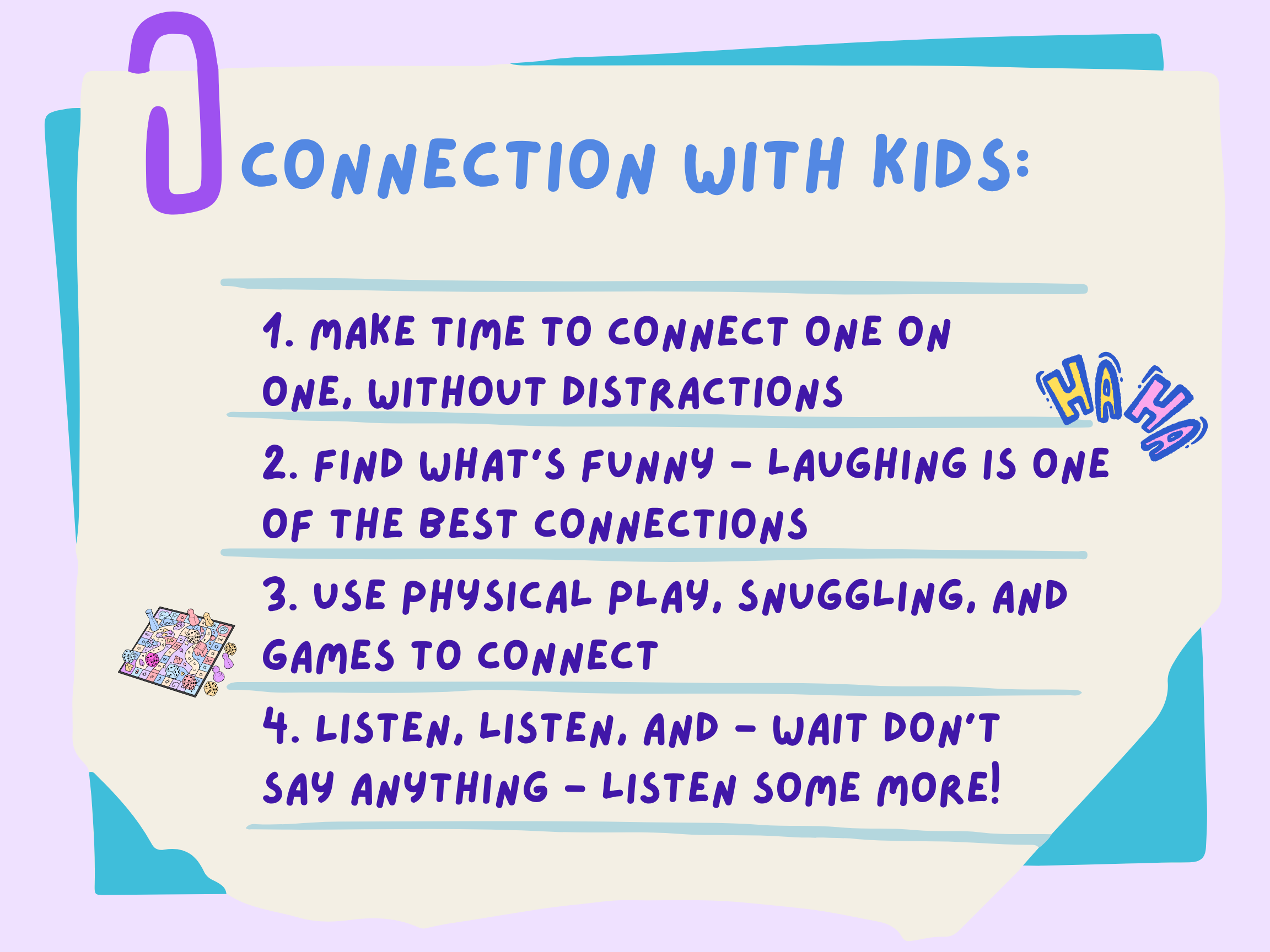
Let’s talk about an alternative to consequences as a way to help kids with limits: bringing a limit in a way that not only reduces stress for you and your child, but also increases connection!
In their book Listen, Patty Wipfler and Tosha Schore offer a way to set and hold limits from a place of connection so kids can grow and learn the things they need to, without getting the message that they are screwing up by being kids.
Example:
Joey has reached the end of his screen time, and his parent has already let him know that it was almost time to turn it off. The timer has gone off, and Joey is still playing.
Let’s look at a couple of paths a parent could take here:
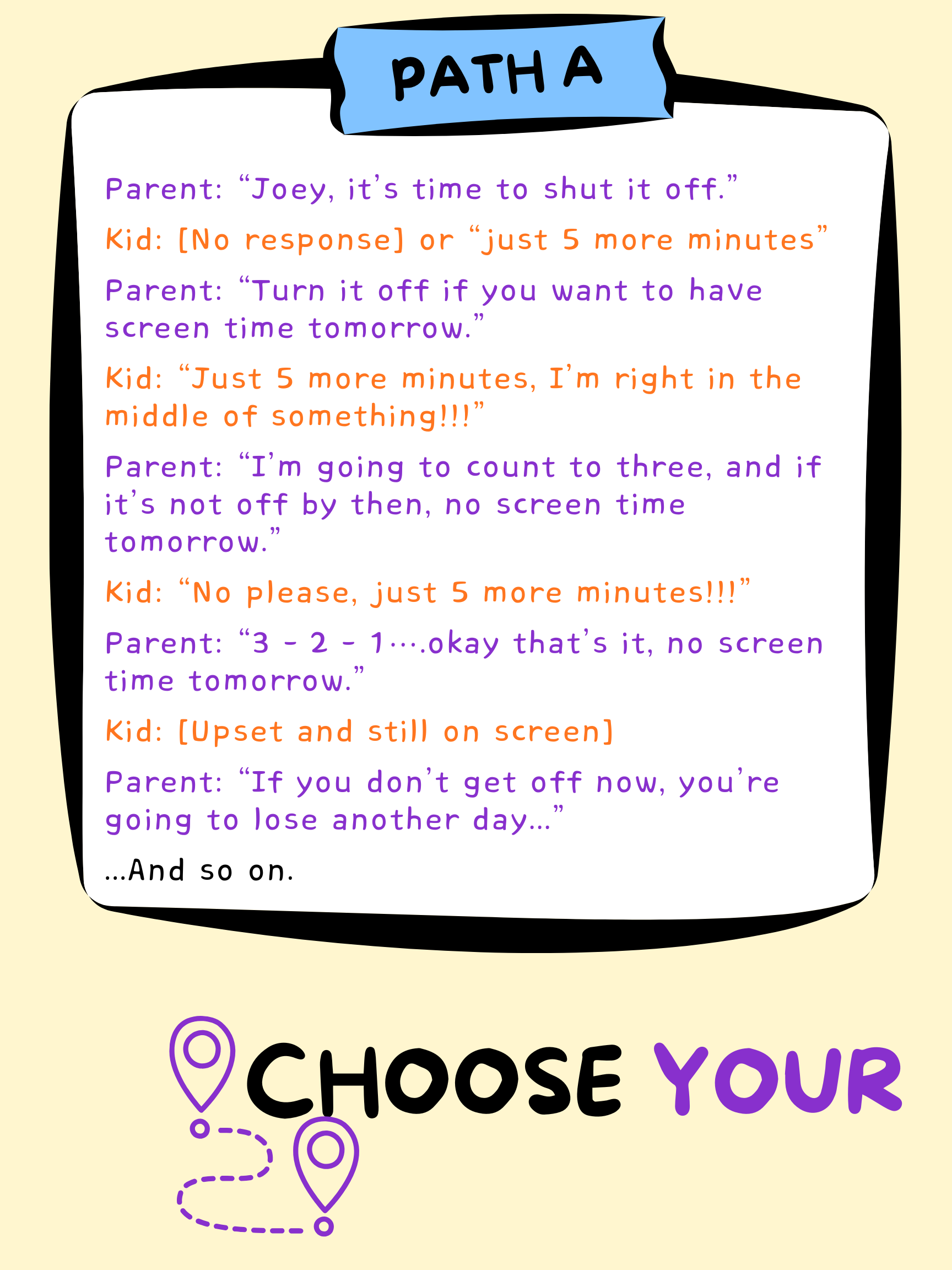
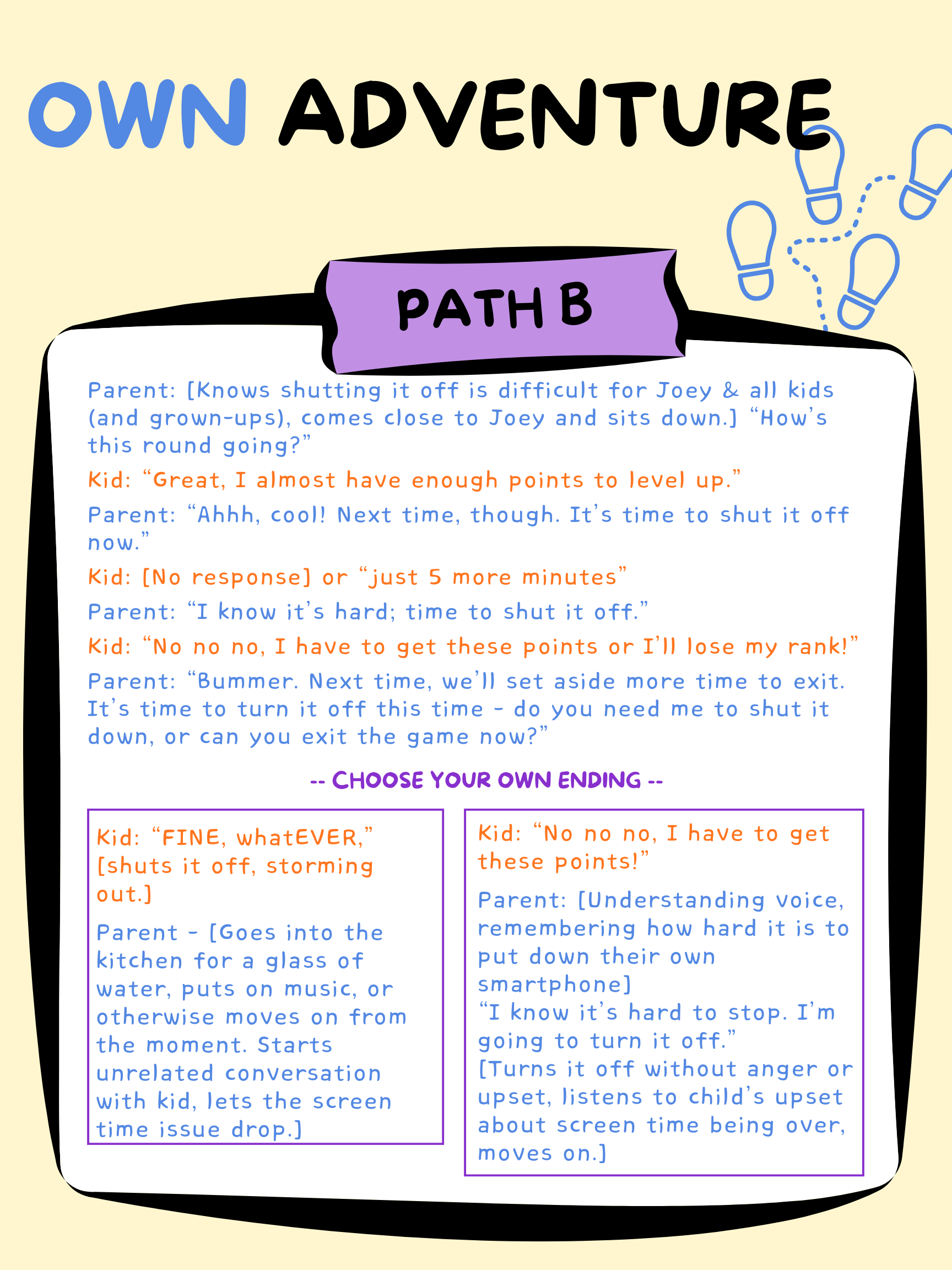
In the first example, even though the limit seems to be the same - time to turn off the screen - the focus is not as much about the screen turning off as what will happen if it doesn’t, with that consequence escalating over time. Parents and kids often feel worse after this, and the ultimate goal - that the kiddo would develop more flexibility about turning off the device - is not served.
When the parent holds the limit by:
1) connecting with the kiddo and listening to what’s important (How’s your game? Cool….);
2) holding the limit calmly, ensuring the limit is held if kid is unable to hold it (turn off device); and
3) connecting again (listening to any upset, without becoming upset)
Kids have a chance to learn that they don’t lose their relationship when they lose their screen time, and parents have a chance to offer another stepping stone toward growing up.
Trust yourself to connect with your kids in ways that bring you closer and prioritize your relationship - you will still be reaping the rewards of your efforts decades from now!
Cascade is offering support to parents now through Connection-Based Parenting therapy groups, with morning and afternoon groups starting soon!
You’ll learn:
What your child’s or teen’s actions can teach us about their emotions
How to bring in some calm when your child cries, yells, hits, withdraws, or melts down
How to build cooperation that flows naturally from connection
How to lean on other adults (including the co-facilitators of the group!) in your life in order to support your kids to thrive
Lots of other fun stuff that’s more effective than bribing, threatening, and yelling!!
Click here to find out more or click the button below to register for our next group.